
About Attabad Lake
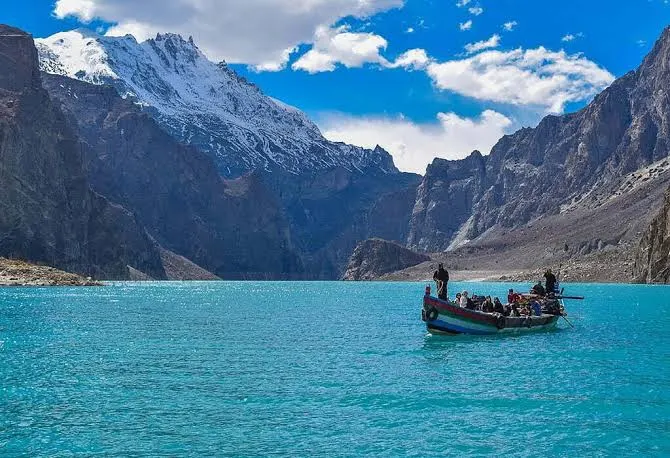
Attabad Lake is the most striking body of water in Pakistan — a 21-kilometre ribbon of impossibly turquoise water squeezed between sheer Karakoram walls in Gojal, Upper Hunza. The lake was born in January 2010, when a massive landslide at Attabad village dammed the Hunza River; the rising waters submerged villages and a stretch of the old Karakoram Highway, and the realigned road now dives through five Chinese-built tunnels along the lake's flank.
Today Attabad has transformed from disaster site to destination. Colourful boats criss-cross the lake, jet skis carve the glassy surface, and lakeside cafés and luxury resorts — including glass-fronted rooms right on the waterline — have made it the north's favourite leisure stop. The colour, at its most intense from late spring through summer, comes from glacial rock flour suspended in the meltwater.
Attabad works perfectly as part of any Hunza itinerary: it sits 30-40 minutes from Karimabad on the way to Passu, Sost, and Khunjerab. Come for a boat ride and lunch, stay for a lakeside night, or simply stop at the viewpoints — no two hours of light paint the water the same colour twice.
Top Attractions in Attabad Lake
Boating on the Lake
Classic wooden boats and modern speedboats run trips across the turquoise water beneath 1,000-metre cliffs.
Jet Skiing & Water Sports
Jet skis, zip lines, and paddle boats operate in season — the highest-altitude water sports scene in Pakistan.
Lakeside Resorts & Cafés
From luxury glass-cabin resorts to simple tea stalls, the shoreline offers some of Hunza's best stays and sunset dining.
The Attabad Tunnels
Five tunnels of the realigned Karakoram Highway skirt the lake — the longest stretch of tunnels in Pakistan, dramatic to drive.
Gojal Viewpoints
Roadside viewpoints above the lake frame the water against Passu's peaks — the classic Attabad photograph.
Best Time to Visit
May to October is prime Attabad season: boating and water sports run daily, and the turquoise colour peaks with summer glacial melt in June-August. Spring frames the lake with blossom in nearby villages.
In autumn the crowds ease and golden poplars line the shore. In deep winter parts of the lake can freeze and boating pauses — hauntingly beautiful, but plan around limited activity.
How to Reach
Attabad Lake lies on the Karakoram Highway about 20 km (30-40 minutes) upstream from Karimabad, Hunza. Any Hunza itinerary can include it; public transport, private cars, and our 4x4s all reach the boating docks directly.
From Gilgit the drive takes about 3 hours; the lake also makes a natural stop en route to Passu, Sost, and Khunjerab Pass on Upper Hunza day trips.
Travel Tips
- Life jackets are provided on boats — insist on wearing them, especially with children; the water is glacial year-round.
- Book lakeside resorts far ahead for summer weekends; they are among the most in-demand rooms in the country.
- Visit early morning for mirror-calm water and the best photos, before boat traffic ripples the surface.
- Negotiate boat and jet-ski prices before boarding, or let your guide arrange fixed rates.
- Combine Attabad with Passu Cones and Hussaini Bridge for a full Upper Hunza day.
Frequently Asked Questions
How was Attabad Lake formed?
A catastrophic landslide in January 2010 dammed the Hunza River at Attabad village. The water rose for months, submerging villages and 19 km of the old highway — creating today's lake.
How much does boating at Attabad cost?
Prices vary by season and boat type; shared wooden boats are economical while private speedboats cost more. Our packages include a boat ride with fixed, pre-arranged rates.
Can I stay overnight at Attabad Lake?
Yes — several resorts, including luxury glass cabins, sit right on the shoreline. Summer weekends sell out weeks in advance, so book early.
Is Attabad Lake worth it in winter?
For photographers, yes: partial freezing and snow-dusted cliffs are spectacular. Boating and water sports, however, largely pause in deep winter.