
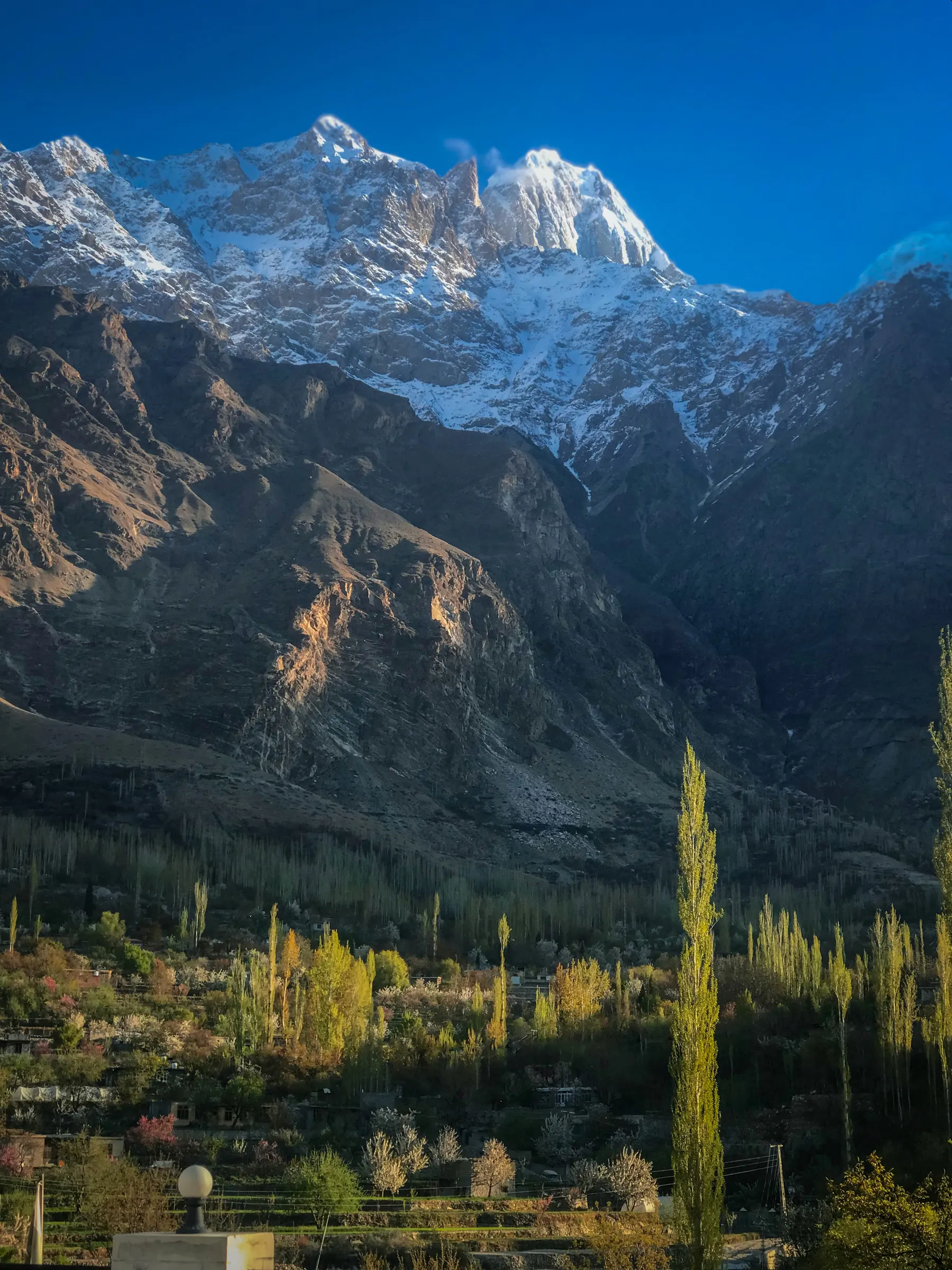
About Hunza Valley
Hunza Valley is the crown jewel of Gilgit-Baltistan and the most sought-after destination in northern Pakistan. Cradled between the Karakoram giants of Rakaposhi (7,788 m), Ultar Sar, and Ladyfinger Peak, the valley combines dramatic mountain scenery with a living heritage that stretches back more than a thousand years. Terraced apricot and cherry orchards climb the hillsides, ancient watchtowers guard stone villages, and the Karakoram Highway threads through it all on its way to China.
A Hunza tour typically centres on Karimabad, the valley's historic capital, where the 700-year-old Baltit Fort looks down over the bazaar and the surrounding orchards. From here day trips fan out to Altit Fort and its royal garden, the Eagle's Nest viewpoint at Duiker for sunrise over seven peaks, the turquoise waters of Attabad Lake, and the cathedral-like spires of the Passu Cones in Gojal (Upper Hunza).
Hunza is also one of the most welcoming places in Pakistan for travellers. Literacy is famously high, the local Burushaski- and Wakhi-speaking communities are known for their hospitality, and the valley is considered exceptionally safe for families and solo travellers alike. Whether you visit for the spring blossom, the summer trekking season, or the golden autumn colours, Hunza rewards every kind of traveller.
Top Attractions in Hunza Valley
Baltit Fort
A 700-year-old Tibetan-influenced palace fort above Karimabad, carefully restored and now a UNESCO-listed heritage museum with sweeping views of the whole valley.
Altit Fort & Royal Garden
Even older than Baltit, Altit Fort's watchtower is over 1,000 years old. Its cobbled village lanes and apricot garden are among the best-preserved heritage sites in Pakistan.
Attabad Lake
A surreal turquoise lake formed in 2010, perfect for boating, jet-skiing, and lakeside dining beneath sheer cliffs.
Eagle's Nest (Duiker) Viewpoint
The classic sunrise and sunset viewpoint over Hunza, with a 360-degree panorama of Rakaposhi, Diran, Golden Peak, Ultar Sar, and Ladyfinger.
Passu Cones & Passu Glacier
The iconic jagged ridgeline of Upper Hunza, best photographed from the Karakoram Highway near Passu village.
Hussaini Suspension Bridge
One of the world's most photographed rope bridges, swaying high above the Hunza River near Gulmit.
Best Time to Visit
Hunza is a year-round destination, but each season offers something different. April and May bring the famous apricot and cherry blossom, when the whole valley turns pink and white against snow-covered peaks. June to September is peak season with warm days, open high passes, and the best conditions for boating on Attabad Lake and day trips to Khunjerab Pass.
October is many photographers' favourite month: autumn turns the poplar and apricot trees gold and crimson, crowds thin out, and the air is at its clearest. Winter (November to March) is cold but magical, with snow-dusted forts, very few tourists, and significantly lower hotel prices.
How to Reach
By air: the fastest route is a one-hour domestic flight from Islamabad to Gilgit, followed by a scenic two-to-three-hour drive up the Karakoram Highway to Karimabad. Flights are weather-dependent, so we always build a backup road plan into our itineraries.
By road: the drive from Islamabad to Hunza along the Karakoram Highway takes roughly 14 to 16 hours and is one of the world's great road journeys, passing the junction point of three mountain ranges at Jaglot and the Rakaposhi viewpoint at Ghulmat. Most travellers break the journey with an overnight stop in Besham, Chilas, or Naran.
Travel Tips
- Book hotels well in advance for the April blossom season and June-August peak — Karimabad's best boutique hotels sell out weeks ahead.
- Carry cash: ATMs exist in Aliabad and Karimabad but are unreliable in peak season.
- Try local specialities — walnut cake, apricot oil, chapshuro, and Hunza water-of-life tea.
- Acclimatise gently: Karimabad sits at ~2,500 m, and viewpoints like Eagle's Nest are close to 3,000 m.
- Pack layers even in summer — evenings are cool at altitude year-round.
Frequently Asked Questions
How many days do I need for a Hunza Valley tour?
A minimum of 4 to 5 days lets you cover Karimabad's forts, Attabad Lake, and Upper Hunza comfortably. Our most popular option is a 7-day Hunza and Skardu combination that adds Baltistan's lakes and deserts to the itinerary.
Is Hunza Valley safe for tourists?
Yes. Hunza is widely regarded as one of the safest travel destinations in Pakistan, including for solo female travellers and families. The local community is famously hospitable, and tourism is the backbone of the valley's economy.
Do foreigners need a permit to visit Hunza?
No special permit is required for Hunza Valley itself — a valid Pakistani visa is sufficient. Passport checks occur at standard checkpoints along the Karakoram Highway, and our guides handle all registration formalities.
What is the best month to visit Hunza?
April for blossom season, June to September for warm weather and open passes, and October for autumn colours. Each season is spectacular in its own way.