
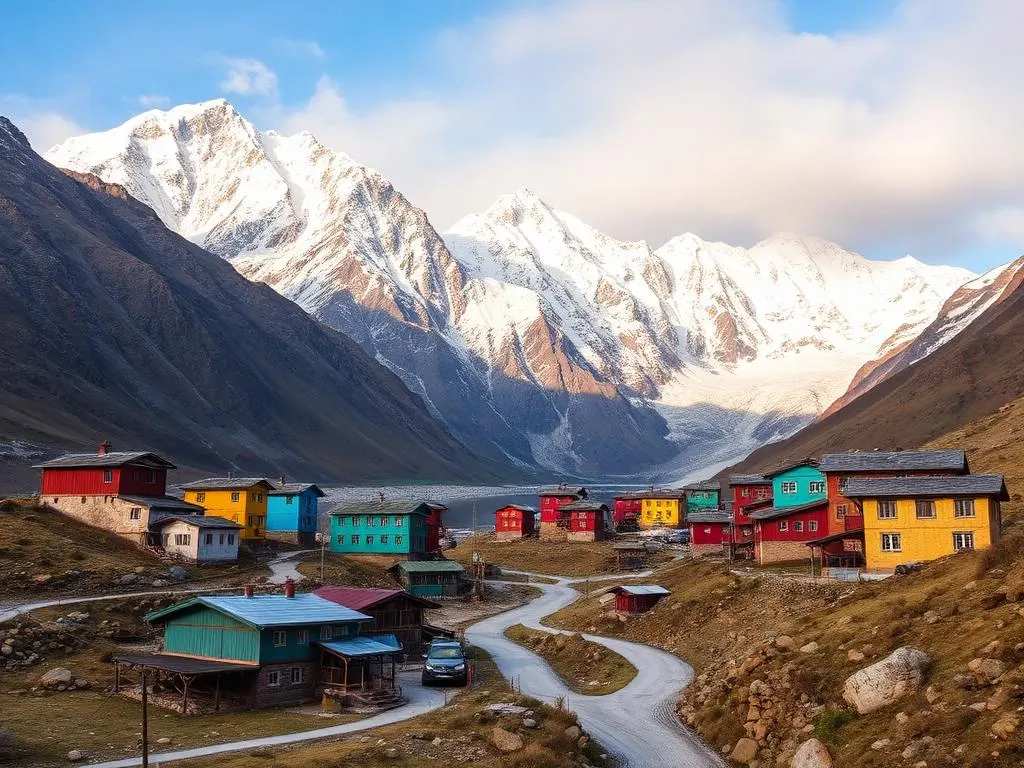
About Ghizer Valley & Shandur
Ghizer is Gilgit-Baltistan's gentle west — a district of wide green valleys, mirror-calm lakes, and villages strung along the Gilgit and Phander rivers on the old route to Chitral. Where the Karakoram valleys are vertical and stark, Ghizer is pastoral: willow-lined fields, trout-rich waters, and some of the friendliest villages in the north.
The valley's icon is Phander Lake, often called 'Little Kashmir', whose deep blue-green waters reflect poplars and snow peaks from a plateau of meadows. Downstream, Khalti Lake near Gupis freezes solid in winter and teems with trout in summer; anglers consider Ghizer the best fishing destination in Pakistan.
Follow the road west and it climbs to Shandur Pass (3,700 m), the 'Roof of the World', where every July the world's highest polo tournament pits Gilgit against Chitral on a grass ground between alpine lakes. Our Ghizer & Shandur Explorer covers the full valley over 8 unhurried days — lakes, villages, side valleys like Yasin and Ishkoman, and the pass itself.
Top Attractions in Ghizer Valley & Shandur
Phander Lake
Ghizer's showpiece — a stunning blue-green lake amid meadows and poplar groves, with a hilltop PTDC resthouse overlooking the water.
Shandur Pass & Polo Festival
The world's highest polo ground at 3,700 m, hosting the legendary Gilgit-vs-Chitral freestyle polo festival each July.
Khalti Lake
A serene lake near Gupis famous for trout fishing in summer and for freezing over completely in winter.
Yasin & Ishkoman Valleys
Quiet side valleys with ancient forts, orchards, and access routes toward the Hindu Kush — perfect for village walks.
Trout Fishing on the Ghizer River
Licensed catch of brown and rainbow trout in some of Pakistan's cleanest waters, with riverside cook-ups.
Best Time to Visit
May to October is the touring season. July is festival month — plan around the Shandur Polo Festival (usually early-to-mid July) but book everything far in advance, as the whole region fills up.
June and September offer the same green landscapes with far fewer visitors. Autumn colours through October are superb along the Phander plateau. Winter is severely cold and the Shandur road closes, though lower Ghizer remains accessible.
How to Reach
Ghizer is reached by road west from Gilgit: Gahkuch (district HQ) is about 2 hours, Gupis and Khalti Lake about 3 hours, and Phander Lake 4 to 5 hours on a mostly paved road along the river.
Shandur Pass lies another 2 to 3 hours beyond Phander on a jeep road — the same route continues down to Chitral, making Ghizer the scenic overland link between Gilgit-Baltistan and Khyber Pakhtunkhwa.
Travel Tips
- Book months ahead for the Shandur Polo Festival — camps and guesthouses sell out region-wide.
- Obtain a fishing licence (arranged by your operator) before casting for trout.
- Fuel up in Gilgit or Gahkuch; pumps are scarce beyond Gupis.
- Accommodation is guesthouse- and resthouse-based — comfortable but simple; lakeside camping at Phander is a highlight.
- Carry warm layers for Shandur even in July; the pass is windy and cold after sunset.
Frequently Asked Questions
When is the Shandur Polo Festival?
Traditionally in the first half of July each year, spanning three days of matches, camping, and cultural events at the pass. Dates are confirmed a few months ahead — we align our Ghizer departures accordingly.
Is Ghizer Valley worth visiting outside the festival?
Absolutely. Phander and Khalti lakes, trout fishing, and the quiet villages of Yasin and Ishkoman make Ghizer a superb week-long trip at any point in summer or autumn.
Can I travel from Gilgit to Chitral via Shandur?
Yes, in summer the jeep road over Shandur connects Ghizer to Chitral — one of Pakistan's classic overland routes. It typically requires a full day and a 4x4.
How is Ghizer different from Hunza?
Ghizer is greener, flatter-bottomed, and far less touristy — lakes and rivers instead of glaciers and forts. Many travellers combine both for contrast.