
About Khaplu & Hushe Valley
Khaplu is Baltistan's best-kept secret — the last kingdom of the old Shyok River route to Ladakh and today one of the most rewarding cultural stops in Gilgit-Baltistan. Its centrepiece is Khaplu Palace, a 19th-century royal residence restored by the Aga Khan Trust for Culture into an award-winning heritage hotel, surrounded by apricot orchards and framed by the granite walls of the Karakoram.
Beyond the palace, Khaplu's old town rewards slow exploration: the Chaqchan Mosque, founded around 1370, is one of the oldest mosques in the region, its timber-and-stone architecture showing the same Tibetan-influenced craft as Baltit Fort. Village lanes wind between traditional Balti houses, and the Shyok River braids across a vast grey floodplain below.
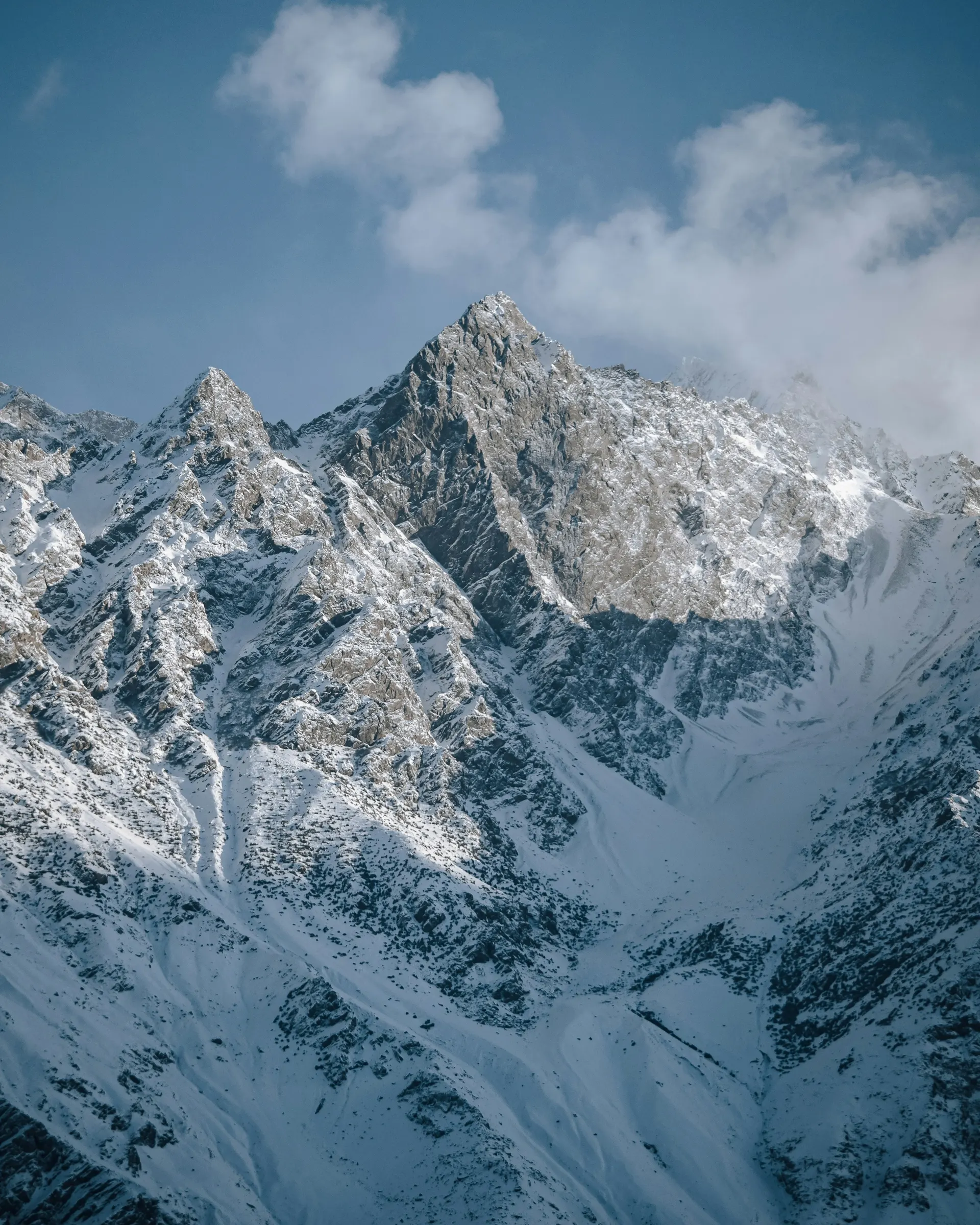
Continue up-valley and you reach Hushe, the fabled 'valley of the climbers', where the perfect pyramid of Masherbrum (K1, 7,821 m) closes the horizon. Hushe village is the trailhead for treks toward Masherbrum Base Camp and the Gondogoro La, and its community of high-altitude porters has supported K2 expeditions for generations. Few places combine culture, hospitality, and raw mountain drama like a Khaplu and Hushe tour.
Top Attractions in Khaplu & Hushe Valley
Khaplu Palace (Serena Heritage Hotel)
A beautifully restored 1840s royal palace where you can stay overnight — one of Pakistan's finest heritage experiences.
Chaqchan Mosque
A 700-year-old wooden mosque attributed to Mir Sayyid Ali Hamadani, a masterpiece of Tibetan-Islamic architecture.
Hushe Valley & Masherbrum Views
The road up the Hushe River ends beneath Masherbrum (7,821 m), with village walks and day hikes toward the base camps.
Shyok River Viewpoints
Sweeping panoramas over the braided Shyok floodplain, especially photogenic at sunrise and sunset.
Balti Village Life
Orchard lanes, water mills, and warm hospitality in villages like Machulo and Kande, with homestay and lunch experiences.
Best Time to Visit
May to October is the season for Khaplu and Hushe. Spring blossom (April-May) fills the orchards; summer (June-August) is best for pushing up the Hushe Valley and for trekking add-ons.
Autumn (September-October) is arguably the most beautiful window, with golden orchards against fresh snow on Masherbrum. Winter is cold and quiet, though Khaplu Palace remains a magical (and heated) retreat for the adventurous.
How to Reach
Khaplu is a 3-hour (103 km) drive east of Skardu along the Shyok River on a good paved road. Most travellers fly Islamabad-Skardu and continue by road the same day.
Hushe village lies another 2 to 3 hours beyond Khaplu via Saling bridge, on a jeep road up the Hushe River. Our Khaplu & Hushe Adventure combines both with nights at Khaplu Palace and village guesthouses.
Travel Tips
- Book Khaplu Palace rooms well ahead in summer — heritage rooms are limited and in high demand.
- Hushe is remote: fuel up and withdraw cash in Skardu or Khaplu before heading up-valley.
- Hire local guides in Hushe for day hikes — the community porter network is superb and it directly supports mountain families.
- Respect prayer times and photography etiquette at Chaqchan Mosque; ask before photographing people.
- Roads are paved to Khaplu but expect jeep tracks beyond — 4x4 recommended for Hushe.
Frequently Asked Questions
Is Khaplu worth visiting compared to Hunza?
Yes — Khaplu offers a quieter, more culturally immersive experience than Hunza, with the region's best heritage hotel and far fewer tourists, plus direct access to the dramatic Hushe Valley.
Can I stay inside Khaplu Palace?
Yes. The palace operates as a Serena heritage hotel with rooms in both the restored palace and its garden annexe. Our packages include palace stays subject to availability.
Do I need trekking experience for Hushe?
No — the drive to Hushe and village walks require no experience. Optional day hikes toward Masherbrum viewpoints are moderate, and full treks (like Gondogoro La) are for experienced trekkers only.
How do I combine Khaplu with Skardu?
Easily: Skardu-Khaplu is 3 hours by road. A typical loop spends 2 days around Skardu, 2 days in Khaplu-Hushe, and adds Shigar on the return — exactly what our 7-day Khaplu & Hushe Adventure does.