Hunza Autumn Photography: Best Spots, Light and Tips
Where to shoot Hunza in autumn: Eagle’s Nest at sunrise, Baltit and Altit, Attabad Lake, Passu and Hoper — with light, timing and gear tips.
Updated October 22, 2026
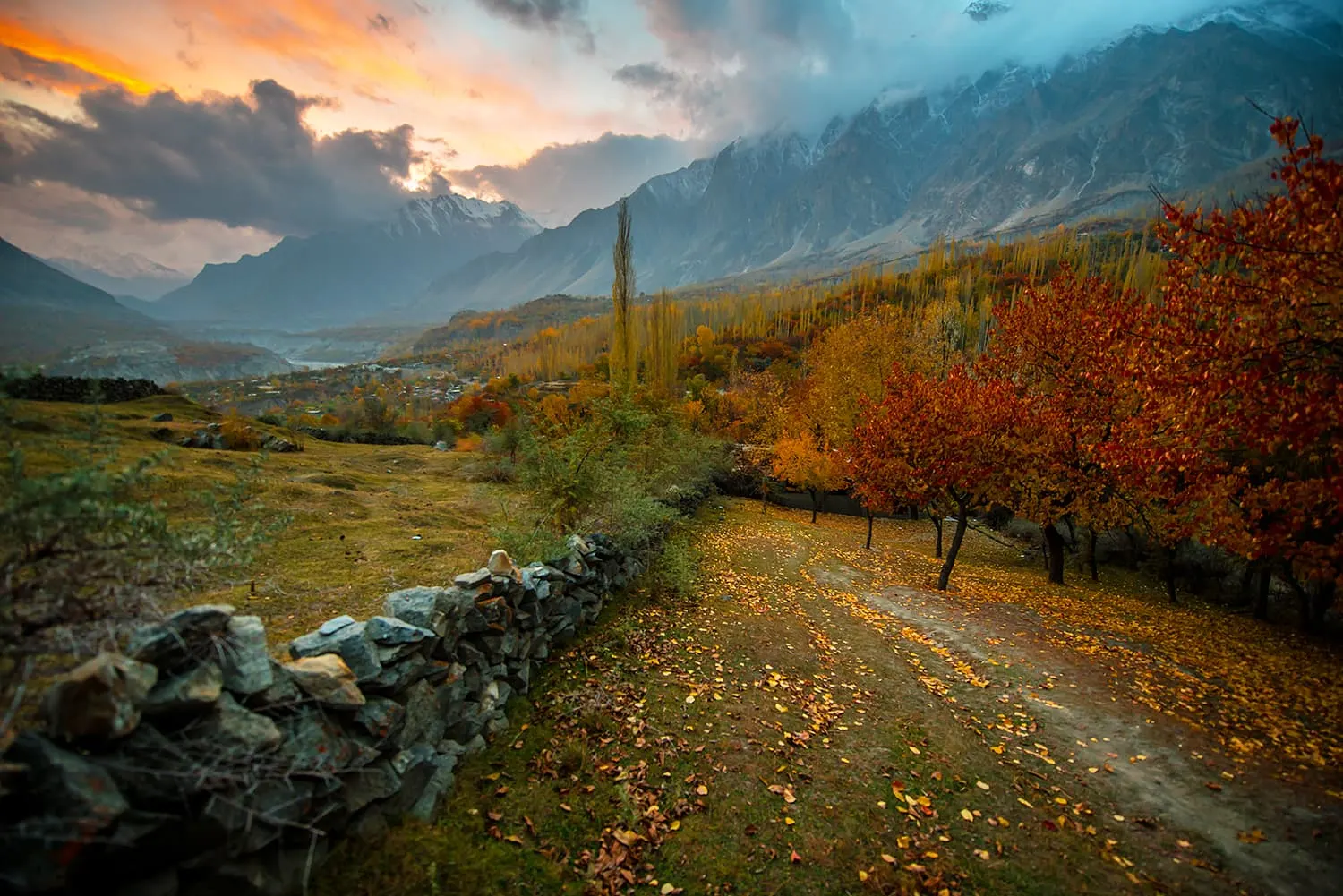
The short answer: where to photograph Hunza in autumn
The best Hunza autumn photographs come from Eagle’s Nest (Duiker) at sunrise, the Baltit Fort rooftop and Altit’s royal garden in morning light, Attabad Lake with yellow poplars on the shoreline, and Passu Cones with Hussaini Bridge in late-afternoon light. Colour is strongest from mid to late October in central Hunza, and the air is at its clearest of the year.
This guide is about the pictures — spots, light, timing and kit. For when the colour peaks, read our Hunza in Autumn (October) guide; for a place-by-place trip map, use the Hunza Autumn destination page.
What is the best time of day for Hunza autumn photos?
First light and the last hour before sunset. At sunrise, haze is lowest and light rakes across the gold valley floor toward Rakaposhi, Diran and Ultar Sar. Mid-morning (about 9–11 am) suits fort rooftops and orchard lanes, when the sun is high enough to light the terraces but shadows are still soft.
Midday light is flat and harsh on gold leaves; use it for travel, lunch and walking. Golden hour at Passu and Attabad gives warm light on the cones and the lake edge.
Best Hunza autumn photography spots
Eagle’s Nest (Duiker): the headline sunrise. Plan a pre-dawn drive and bring gloves — it is cold at about 3,000 m even when Karimabad feels mild.
Baltit Fort and Karimabad terraces: the classic composition of orchards, poplars and the fort against Ultar Sar. Altit Fort and its garden are quieter and work well in autumn for heritage frames.
- Eagle’s Nest, Duiker — sunrise panorama over gold Hunza
- Baltit Fort rooftop — terraces and peaks in morning light
- Altit Fort and royal garden — quieter heritage frames
- Attabad Lake — turquoise water, yellow shoreline poplars
- Passu Cones and Hussaini Bridge — late-afternoon light
- Hoper Glacier and Nagar — quieter colour and a Khunjerab backup
- Rakaposhi viewpoint, Ghulmat — golden trees below a 7,788 m wall
What gear do you need for autumn shoots in Hunza?
A wide-angle lens for valley panoramas and a short telephoto (about 70–200 mm) for compressing peaks over orchards cover most shots. A light tripod helps at sunrise, when shutter speeds drop. Carry spare batteries inside your jacket — cold drains them fast.
Dress for the viewpoint, not the town: down layer, gloves and a hat for pre-dawn Duiker. Phone shooters should clean the lens often, since cold and breath fog it.
How do you plan around weather and closures?
Keep a buffer morning. Cloud can hide a single sunrise, and a second attempt at Eagle’s Nest is the best use of a spare day. Khunjerab Pass depends on snow and the border gate — confirm the night before, and treat Nagar and Hoper colour as the swap rather than forcing a closed pass.
Our 6-day Hunza Autumn Gold Tour is built around light rather than mileage: sunrise at Duiker, heritage in morning light, Attabad and Passu at the right hours, and a buffer morning before departure.
Quick FAQ
Where is the best sunrise spot in Hunza? Eagle’s Nest at Duiker, for the wide gold valley under Rakaposhi and Ultar Sar.
When is the best month for Hunza autumn photos? Mid to late October for central Hunza; slightly earlier for Passu and upper Hunza.
Can I shoot Attabad Lake in autumn? Yes. The water keeps its turquoise and the shoreline poplars turn yellow; mornings are calmer for reflections.
Do I need a tripod? Helpful for sunrise and low light, but not essential for daytime orchard and fort shots.