Hunza in Autumn (October): Peak Gold Dates and How to Visit
Hunza in autumn peaks mid to late October. Peak gold dates, October weather, when colour starts, September vs fall, and how to plan a 5–6 day trip.
Updated October 21, 2026
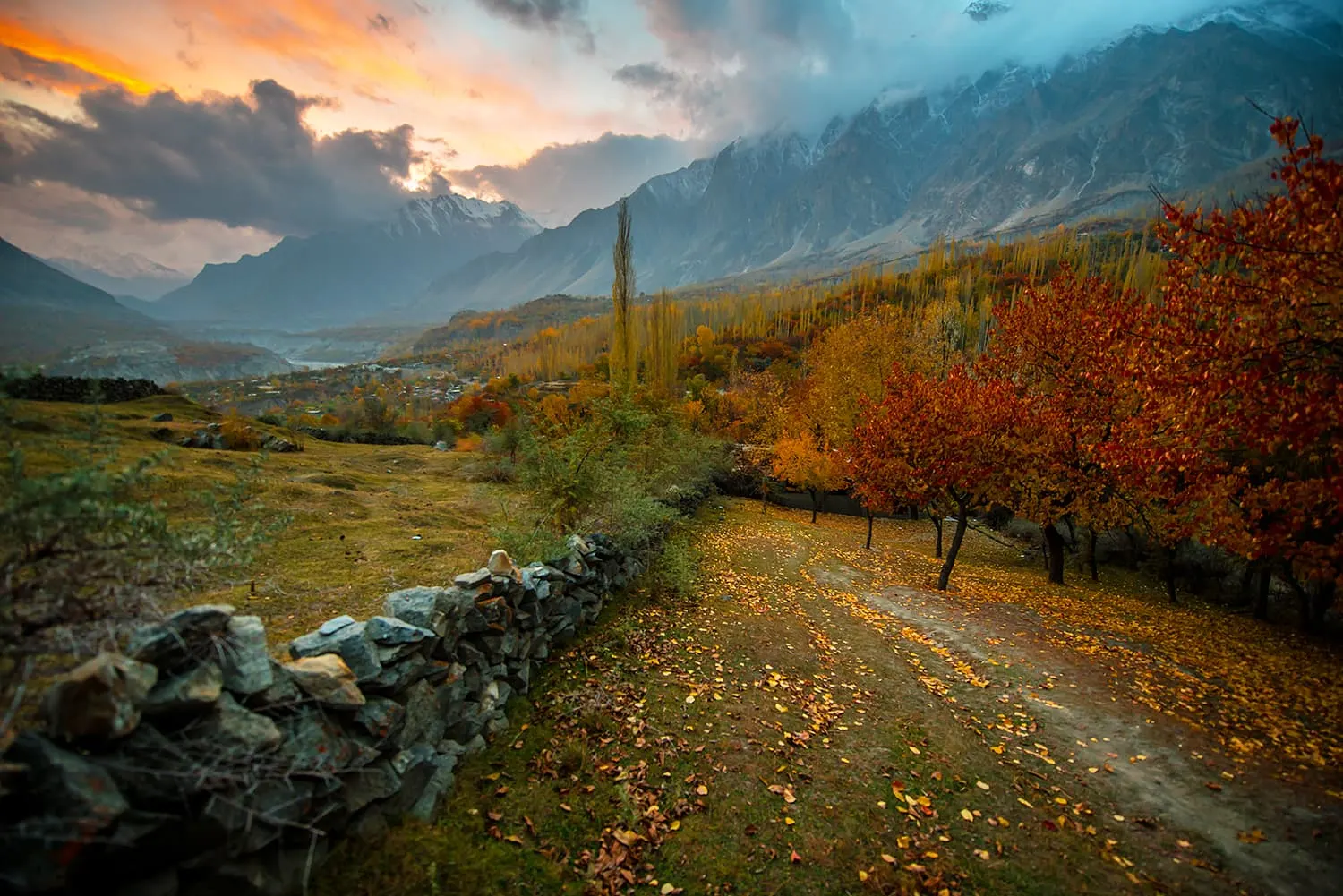
Why Hunza in autumn ranks above summer for many travellers
Search interest for Hunza in autumn and Hunza in October rises every year as summer demand cools. The reason is visual and practical: poplars and apricot orchards turn gold and crimson, the air is the clearest of the year, and the valley is quieter than July — without becoming a winter trip yet.
This is not the same page as our year-round Hunza guide. Use that for forts, logistics, and the full place story. Use this post when your question is specifically timing: when do the colours peak, is October worth it, and what should a short autumn itinerary include. For the place-by-place autumn map see Hunza in Autumn; to book the colour circuit see the 6-day Hunza Autumn Gold Tour.
When does autumn start in Hunza?
Autumn in Hunza does not flip on one calendar day. The first yellow usually appears in the highest orchards in late September. Upper Hunza (Gojal — Gulmit, Passu, Hussaini) typically turns first around mid-October. Central Hunza — Karimabad, Altit, Ganish — and the Nagar side usually peak in the last week of October into the first days of November. By mid-November most leaves are down and the season has tipped into early winter.
If someone asks “when autumn starts in Hunza,” the honest operator answer is: late September for the first hints, mid-October for Gojal, and late October for the classic Karimabad gold bowl. Exact timing shifts with how cold September was.
- Late September: first yellow at altitude; still mostly green on the valley floor
- Early–mid October: Gojal / Passu colour advances; Khunjerab still more likely open
- Mid–late October: safest central-Hunza peak window for most travellers
- Early November: last colour; cold nights; treat as late-season, not peak gold
When do Hunza autumn colours peak?
If you can only pick one window for central Hunza (Karimabad / Altit), aim for roughly 10–25 October in a typical year. For Passu and Gojal at their best, go about a week earlier. Treat mid-October as the safest booking bet, not a guarantee of peak on a single calendar day.
- Early October: first yellow in upper valleys; Khunjerab still more likely open
- Mid-October: strongest practical mix of colour + access for most visitors
- Late October: deepest gold in central Hunza; higher chance of pass closures and frost
- Early November: last colour; cold nights; treat as late-season, not peak gold
Hunza in October: weather, crowds, and what is open
Hunza in October is the heart of the autumn search: dry, bright days and cold nights with poplars turning gold from roughly the second week of the month. Valley-floor daytime temperatures are often about 10–18°C, with nights near freezing or a few degrees above — colder in Gulmit and Passu. Pack a down layer and gloves for Eagle’s Nest sunrise even if Karimabad feels mild at lunch.
Crowds sit between summer peak and winter quiet. Weekdays are workable; clear mid-October weekends still fill the best view rooms. Attabad Lake boats usually still run. Baltit and Altit stay open. Deosai is the wrong add-on for late-season Hunza — the plateau is closing or closed; do not build an October Hunza plan around it.
Hunza in September vs Hunza in fall
Hunza in September is the shoulder into autumn: late September brings the first gold at altitude, clearer air after monsoon humidity, and easier Khunjerab odds than late October. It is a good month if you want fewer cold nights and are willing to accept that Karimabad may still be partly green.
“Hunza in fall” is the same season travellers mean by Hunza in autumn — the US/Canadian phrasing for late September through October colour. If your dates say fall, plan for the October gold window above, not summer water sports or a Deosai day.
Is Khunjerab Pass open in autumn?
Often in the first half of October; not guaranteed after the first real snowfall. Operators and local guides typically see more turn-backs from mid to late October. Treat Khunjerab as a prize day, not the reason for the whole trip.
We confirm Sost and the park gate the night before. If the gate is shut, a Nagar–Hoper colour day or a slow Passu photography morning is the right swap — forcing a frozen pass wastes the gold window you came for.
Best places for Hunza autumn photography
Eagle’s Nest (Duiker) at sunrise is the headline shot: gold valley floor under Rakaposhi, Ultar, and Ladyfinger. Baltit Fort rooftop and Altit’s garden give heritage frames against amber terraces. Attabad Lake keeps its turquoise with yellow poplars on the shore. Passu Cones and Hussaini work in low, sharp afternoon light. Hoper Glacier and Nagar add quieter colour when upper roads are busy or closed.
Shoot first light when haze is lowest. Save Attabad and Passu for clear mid-mornings or golden hour. Keep one buffer morning in Karimabad — autumn Gilgit flights still cancel, and a second Duiker sunrise is the best use of a spare day.
- Eagle’s Nest sunrise over gold Hunza
- Karimabad orchards and Baltit rooftop
- Altit Fort, royal garden, Ganish
- Attabad Lake under yellow poplars
- Passu Cones and Hussaini Bridge
- Hoper / Nagar as colour backup to Khunjerab
How many days do you need for Hunza in autumn?
Five to six full days based in Karimabad covers the colour circuit without turning every day into a long drive: forts and Duiker, Attabad–Passu, Nagar–Hoper, and either Khunjerab or a weather swap, plus a buffer morning for flights.
Our 6-day Hunza Autumn Gold Tour is built for that window only — private 4x4, licensed Hunza guide, boutique rooms, and pre-paid fees — with Deosai left off the map on purpose. For the place guide, see Hunza in Autumn; for month-by-month GB timing, see Best Time to Visit Gilgit-Baltistan.
Hunza autumn vs Hunza & Skardu in October
Stay in Hunza if colour is the goal. Adding Skardu only makes sense with 7–8+ days and the acceptance that Deosai is likely closed; Shigar, Katpana, and Kachura can still work. A recycled summer itinerary that promises Deosai in mid-October is the wrong product for this search.
If you are reading this in October, you are inside the booking window — good terraces still sell out on clear weekends. Book the next available autumn departure, not “sometime this month.”
Quick FAQ
When is Hunza autumn / peak gold in 2026? Usually last week of September through late October, with the safest central-Hunza bet around mid to late October.
When does autumn start in Hunza? First yellow late September; Gojal mid-October; Karimabad peak typically late October.
Is October a good time to visit Hunza Valley? Yes for colour, clear air, and photography. You trade summer water-sports intensity for colder nights and possible high-pass closures.
Is Hunza in September worth it? Yes for shoulder colour and better pass odds; expect less full-valley gold than late October.
What does Hunza in fall mean? Same as Hunza in autumn — plan for the October gold window.
Can you still boat on Attabad in autumn? Yes on most October days; mornings give the calmest reflections under gold poplars.